

Athens to Folegandros Ferry: Piraeus, Times and Tips
Piraeus to Karavostasi in 4 to 11 hours: high-speed or conventional, how to reach the port and what to do when you land.
The route at a glance
Athens to Folegandros means Piraeus to Karavostasi: 4–6 hours on a high-speed vessel, 7–11 hours on a conventional ferry, in a fare band of roughly €40–85 one way. It is the only route that works twelve months a year.
Three operators cover it in one form or another — Blue Star Ferries, SeaJets and Zante Ferries — with three to seven sailings a week in summer and a thinner service the rest of the year.
The conventional ferry does not run in a straight line. It threads the western Cyclades, calling at Kythnos, Serifos, Sifnos, Milos and Kimolos before Folegandros; which of those it stops at decides whether your crossing is seven hours or eleven. High-speed vessels skip most of them and operate roughly April to October.
Some seasons put a sailing out of Lavrio instead of Piraeus. Check which port your ticket names — they are on opposite sides of Attica. Every alternative route is in our guide to getting to Folegandros.
Getting to Piraeus
Piraeus is a big commercial port with numbered gates spread over several kilometres, and the gate for the Cyclades changes from year to year and even from ship to ship. Ask at the port kiosk or check your ticket on the morning you sail; do not assume last year's gate.
| From Athens airport (ATH) | Typical time | Notes |
|---|---|---|
| Metro (line 3 to Monastiraki, then line 1) | 1h15–1h30 | Cheapest, one change, runs most of the day |
| Express bus X96 | 1h–1h30, longer in traffic | Direct, 24 hours a day, luggage space, stops along the port |
| Taxi or private transfer | 45 min–1h15 | Fixed-tariff airport runs; simplest with luggage or at night |
| From central Athens on metro line 1 | 20–30 min | From Monastiraki or Omonia |
Leave at least an hour of slack. Boarding usually closes around half an hour before departure, and finding the right gate on foot with suitcases always takes longer than you expect.
High-speed or conventional?
| Feature | High-speed | Conventional ferry |
|---|---|---|
| Duration | 4h–6h | 7h–11h |
| Season | Roughly Apr–Oct | Year-round |
| Seating | Numbered airline-style seats, indoors | Deck class, lounges, cabins on some ships |
| Vehicle deck | Limited or none | Yes |
| Fare band | Upper half of €40–85 | Lower half of €40–85 |
| Stops | Few | Kythnos, Serifos, Sifnos, Milos, Kimolos |
| In strong wind | First to be cancelled | Rarely cancelled |
The high-speed boat buys you half a day and loses it again with the first meltemi. The conventional ferry is more comfortable than people expect: you can walk out on deck, eat something, watch five islands go past and arrive rested.
With children or a lot of luggage, the conventional ferry is almost always the right call. You get room to stand up, food on board and a proper journey instead of four hours strapped into a seat.
Overnight or daytime crossing?
The conventional ships on this line have run both evening and morning departures over the years. An evening departure means arriving in the small hours or early morning; a morning one puts you into Karavostasi in the afternoon. Which pattern exists in a given year changes, so look at the current season's schedule before you book a room.
The overnight option buys you a day of holiday and a hotel night, but it has a cost: you arrive at a dark port, the buses are not always there, there are only one or two taxis on the whole island, and rooms are rarely ready before midday.
If you arrive at night, arrange in advance how you will get up to Chora. The road is 3 km of switchback climb with no lighting and no pavement; it is not a walk to do with suitcases in the dark.
We deliver to the port whatever time your ferry docks — and if the sailing changes, we change with it.
The alternative: fly plus a short ferry
If your hours are worth more than your euros, fly from Athens to Santorini or Milos and finish by sea. The flight takes something like half an hour to forty-five minutes, and then you have 45 minutes to 1h30 by high-speed boat from Athinios, or 45 minutes to 1h15 from Adamas.
The combination usually costs more than the direct ferry and adds one more place where things can go wrong: two bookings, two check-ins, one weather system. Leave at least three hours between landing and the ferry's departure, or better still spend a night on the intermediate island.
It works well when you wanted to see two islands anyway. The detail of the Santorini connection is in our Santorini to Folegandros ferry guide.
Booking and practical tips
Ferryhopper shows all three operators in one search; their own sites work just as well. Summer schedules usually appear in late winter and change during the season, so check again shortly before you travel.
- In July and August, book as soon as your dates are fixed; weekends go first.
- Tickets are electronic with most operators now, but keep a screenshot too: the signal in the port is poor.
- Change and cancellation rules differ by operator; read them before you pay.
- Take water and something to eat on the long crossings, especially if you change ships at an intermediate island.
The full plan for the trip, with every route and airport, is in our Folegandros travel guide.
Arrival at Karavostasi
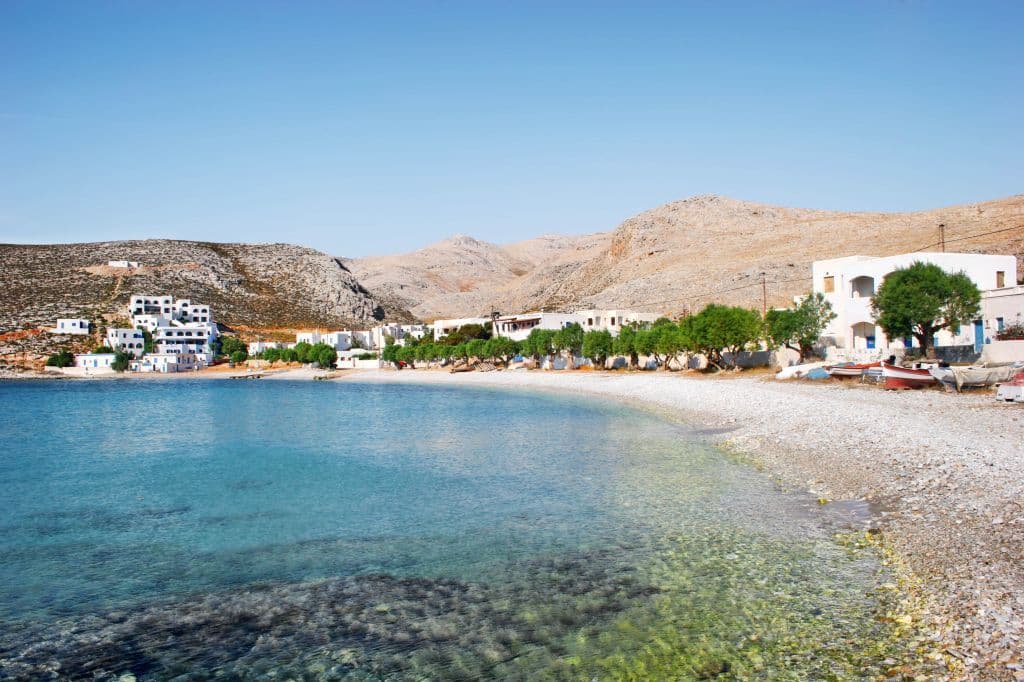
After seven or eleven hours at sea, the last thing you want is to wait. Karavostasi is a quay with a beach and a few tavernas; Chora is 3 km and about 10 minutes uphill. Buses meet most ferries, but there are only one or two taxis on the whole island.
We deliver to the port free of charge, whatever time your ferry docks, with helmets, an island map and 24/7 assistance included. See what is at the port in our Karavostasi port guide, and what a scooter in Folegandros costs.
Frequently asked questions
Related guides
Getting thereHow to Get to Folegandros: Ferries, Ports and Nearest Airports
Folegandros has no airport: every ferry route, how long it takes, what it costs and what to do the moment you step off at Karavostasi.
 Getting there
Santorini to Folegandros Ferry: Times, Fares and Tips
Forty-five minutes to three hours from Athinios to Karavostasi: which boat to pick, when it sails and what to do the moment you land.
Villages & sightsKaravostasi, the Port of Folegandros: Arrival, Beaches, Tavernas and the Way Up to Chora
Every ferry docks here. What you find on the quay, how to get up the 3 km to Chora, the port's three beaches, fish on the seafront, the excursion and diving boats, and why a night at Karavostasi is worth it.
Book a scooter for your arrival
Book online in a minute or message us on WhatsApp.