
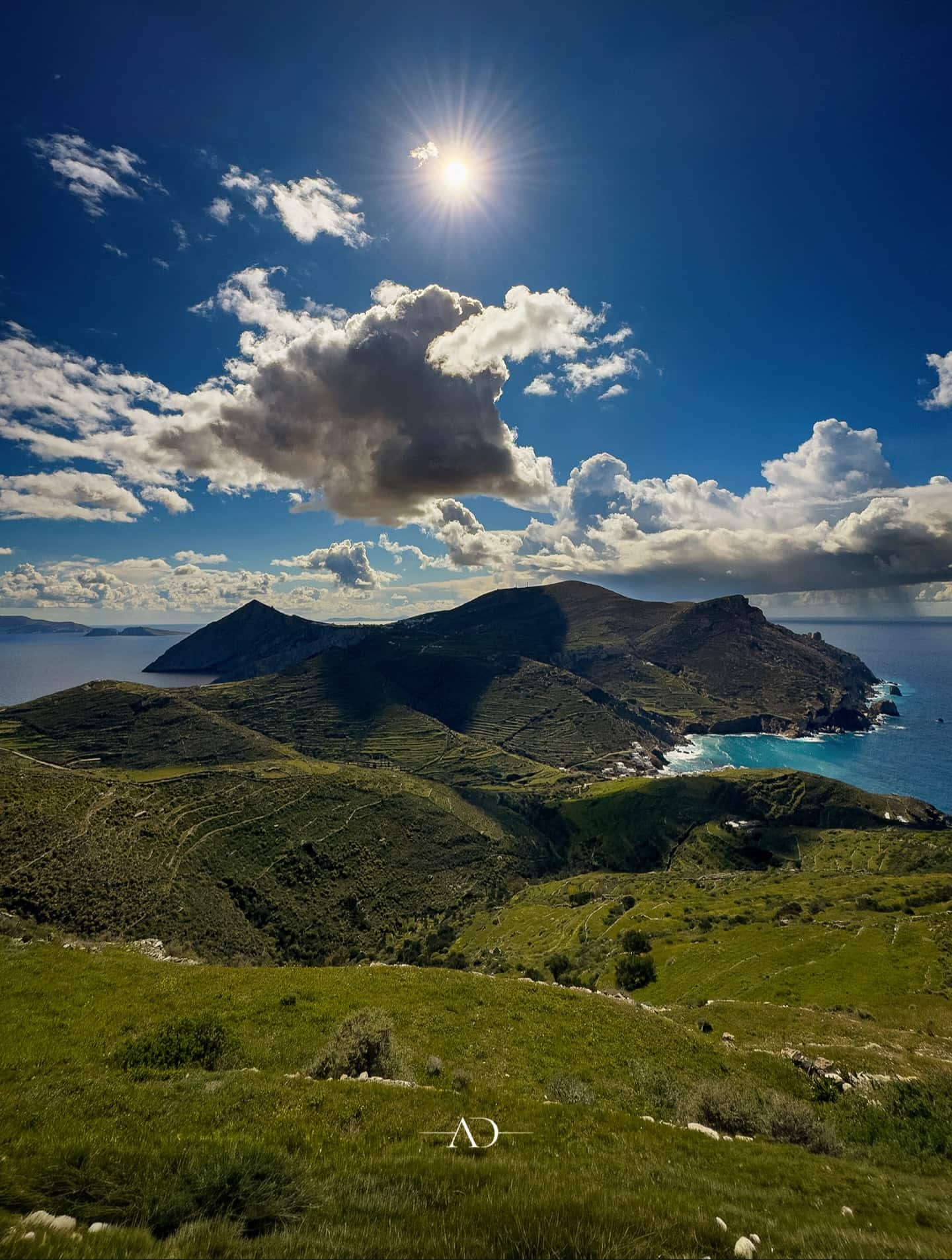
Santorini to Folegandros Ferry: Times, Fares and Tips
Forty-five minutes to three hours from Athinios to Karavostasi: which boat to pick, when it sails and what to do the moment you land.
The route at a glance
The Santorini to Folegandros ferry is the shortest and most popular way onto the island: 45 minutes to 1h30 on a high-speed vessel, 2–3 hours on a conventional ferry, in a fare band of roughly €20–60 one way.
Boats sail April to October, daily through the summer and often twice a day in July and August. They all leave from Athinios, Santorini's working port under the caldera, and they all dock at Karavostasi, the single quay 3 km below Chora.
Two islands could hardly be less alike for such a short crossing. Santorini is a spectacle with millions of visitors; Folegandros is a cliff-top village of 800 residents with one paved road. If you want Cycladic drama without the queues, this is the boat to take. Start with our Folegandros travel guide.
High-speed or conventional?
Two very different kinds of ship work this route, from the same port and with a very different experience on board.
| Feature | High-speed | Conventional ferry |
|---|---|---|
| Duration | 45 min–1h30 | 2h–3h |
| Comfort | Airline-style seating, indoors only | Open decks, lounges, a bar, room to walk |
| Vehicle deck | Usually none or very limited | Yes: cars, scooters, ATVs |
| Fare band | Upper half of €20–60 | Lower half of €20–60 |
| Operators | SeaJets, sometimes others | Blue Star Ferries, Zante Ferries |
| Months | Apr–Oct | Apr–Oct, some sailings either side |
| In a meltemi | First to be cancelled | Rarely cancelled |
Pick high-speed if your day is tight or you have a hotel check-in to make; pick a conventional ferry if you get seasick, travel with children, or the forecast shows north wind. The slow boat is the reliable one.
Sailing days and season
This route is purely seasonal. There is no direct Santorini to Folegandros link in winter: then you travel via Piraeus or Milos instead.
| Period | What to expect |
|---|---|
| April–May | A few sailings a week, building up; conventional services steadier |
| June | Close to daily, easy to plan around |
| July–August | Daily, often twice a day; book weeks ahead |
| September | Daily to almost daily, the best month to travel |
| October | Thinning to a few a week, high-speed services end |
| November–March | No direct link; travel via Piraeus or Milos |
Timetables are reissued every year and adjusted mid-season. A day that had two departures last summer may have one this year, or none. Always check shortly before you travel, and keep the other routes to Folegandros in mind as a fallback.
Booking and the port of Athinios
Book online, not on the quay. Ferryhopper shows every operator in one search and issues tickets you can scan from your phone; the operators' own sites work too. For July and August, book as soon as your dates are fixed.
Ferries leave from Athinios, not from Fira and not from the old port below the town. Allow 20–30 minutes by road from the airport (JTR) or from Fira, more if a cruise ship has just emptied or you get stuck behind a convoy of coaches on the hairpins.
Get to Athinios at least 40 minutes early. The road down is narrow, parking is minimal, and boarding happens at the end of the quay among lorries and passenger queues. There is almost no shade to wait in, so bring water.
Keep your luggage with you until the last moment: on high-speed boats it goes into racks by the entrance, on conventional ferries either in the garage or in the same racks.
The crossing: what you see on the way
The ship pulls out of the caldera and turns north-west. Sikinos appears almost at once, low and nearly empty, and there is often an intermediate call there or at Ios. Past Sikinos, Folegandros rises out of the sea like a wall.
Your first sight of the island is the northern cliffs and, high above them, the white line of Chora with the Panagia church on the ridge. If the boat is not full, stand on the starboard side as you approach: that is where you pass the cliff face hiding Chrysospilia, the ancient cave that can only be seen from the water.
In a strong meltemi in July and August, the stretch outside the caldera gets lively. If you are prone to seasickness, take a conventional ferry, sit low and mid-ship, watch the horizon and stay outside. The crossing is short enough to be over before it becomes an ordeal.
On arrival at Karavostasi
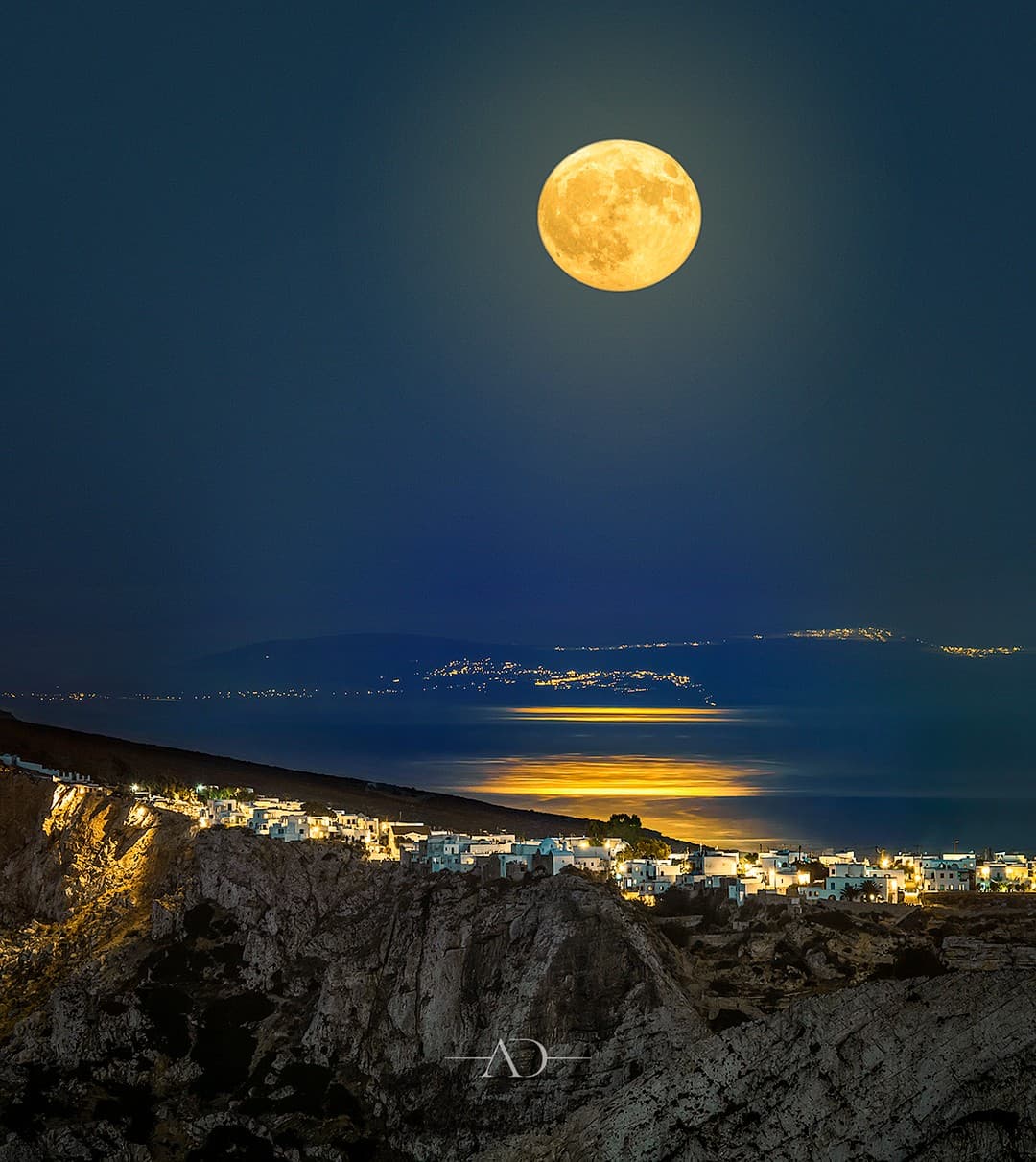
Karavostasi is one quay, a beach and a few tavernas. Chora sits 3 km and roughly 10 minutes above it. Buses meet most ferries; there are only one or two taxis on the whole island, so do not count on them.
Once your bags are down, the island opens up: Agali, Ano Meria, the beaches of the south coast. With your own vehicle you never wait for a timetable to reach a swim or to catch sunset from the Panagia church.
We meet you on the quay with your vehicle, free delivery, helmets and a map included — and if the boat runs late, we wait too. See what suits you on our rental prices page, and what to expect in the Karavostasi port guide.
The return leg and the day-trip question
A day trip from Santorini is theoretically possible and rarely worth it. Departure times change every year and often leave only a few hours ashore — just enough for a coffee in Chora and one swim, with no Ano Meria and no sunset. Give Folegandros two or three nights.
For the return leg, book it at the same time as the outbound, especially in August. If you have a flight out of Santorini, come back the day before: if the wind picks up and the sailing is cancelled, the next one may be 24 hours later.
If the island-hopping suits you, look at the other routes to Folegandros, or at the Athens to Folegandros ferry for the journey back to the mainland.
Frequently asked questions
Related guides
 Getting there
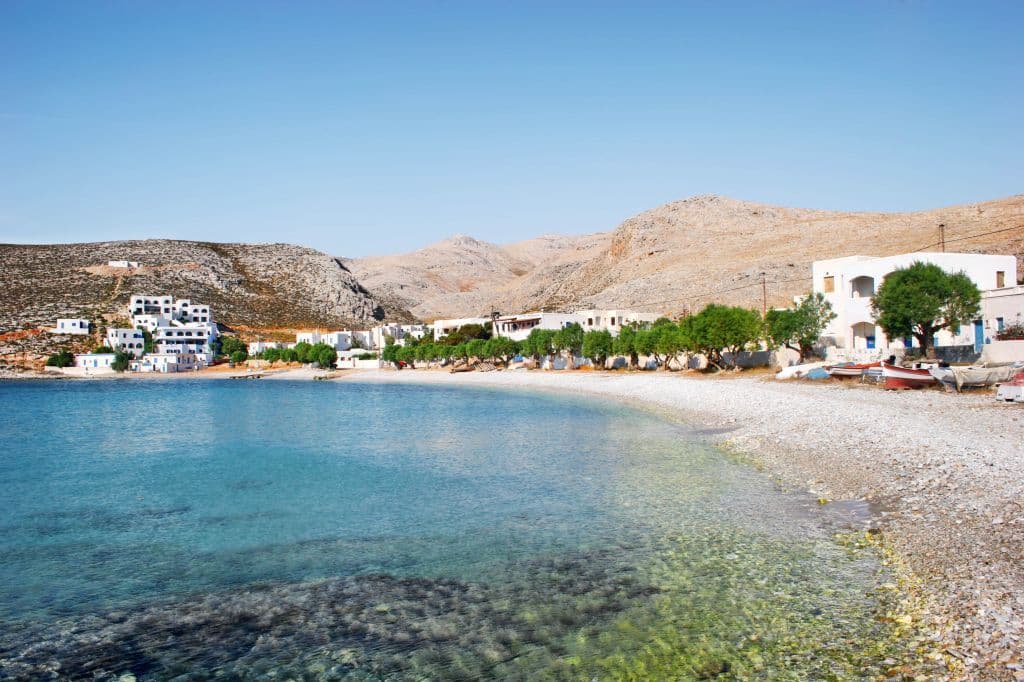
How to Get to Folegandros: Ferries, Ports and Nearest Airports
Folegandros has no airport: every ferry route, how long it takes, what it costs and what to do the moment you step off at Karavostasi.
 Getting there
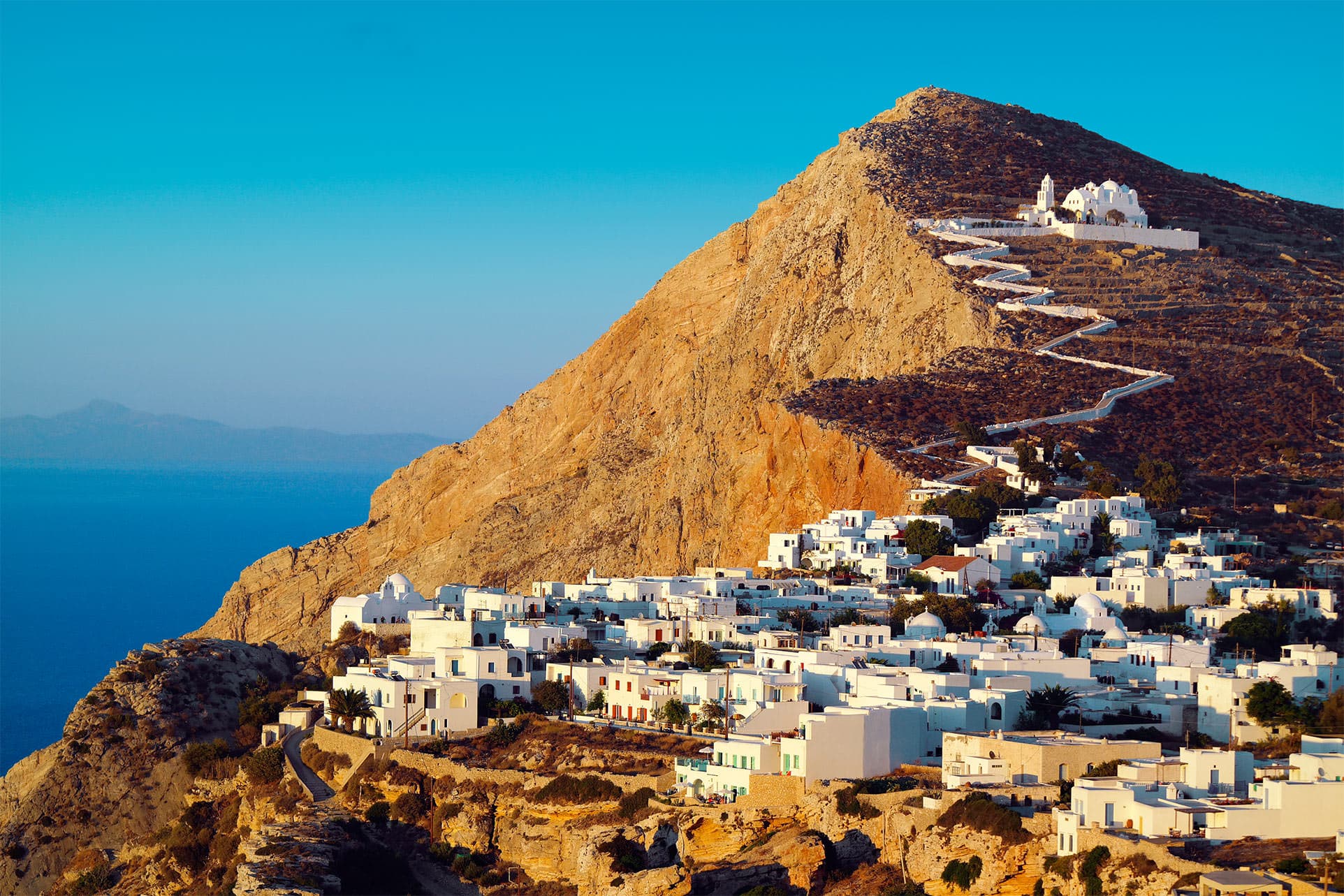
Athens to Folegandros Ferry: Piraeus, Times and Tips
Piraeus to Karavostasi in 4 to 11 hours: high-speed or conventional, how to reach the port and what to do when you land.
Villages & sightsKaravostasi, the Port of Folegandros: Arrival, Beaches, Tavernas and the Way Up to Chora
Every ferry docks here. What you find on the quay, how to get up the 3 km to Chora, the port's three beaches, fish on the seafront, the excursion and diving boats, and why a night at Karavostasi is worth it.
Book an ATV for your arrival
Book online in a minute or message us on WhatsApp.