
How to Get to Folegandros: Ferries, Ports and Nearest Airports
Folegandros has no airport: every ferry route, how long it takes, what it costs and what to do the moment you step off at Karavostasi.
The short answer
Folegandros has no airport. Everyone arrives by sea, at the small port of Karavostasi on the east coast, 3 km below Chora.
There are two realistic ways in. Fly to Athens (ATH) and sail from Piraeus — 4–6 hours on a high-speed vessel, 7–11 hours on a conventional ferry — or fly to Santorini (JTR) or Milos (MLO) and take a short island-hopping ferry of roughly one to three hours.
In July and August something sails almost every day from several directions. In May and October the map thins out to a few crossings a week, and between November and March the island lives on the year-round Piraeus and Milos lines.
Everything below is given as a range, not a timetable: schedules are reissued every year, so confirm your exact sailing on Ferryhopper or with the operator before you book anything else. Our Folegandros travel guide covers the rest of the trip.
Folegandros airport: there isn't one — the nearest alternatives
Folegandros has no airport and realistically never will: the island is 32 km² of terraces and rock with no flat ground for a runway. Searching for a Folegandros airport only ever leads to the same answer — you fly to a neighbouring island and finish the journey by sea.
Five airports feed the island. Santorini is the busiest and the only one with direct international flights; Milos, Naxos and Paros take domestic aircraft from Athens; Athens itself is the fallback that works all year round.
| Airport | Code | Ferry port you sail from | Typical ferry time | When it makes sense |
|---|---|---|---|---|
| Santorini | JTR | Athinios | 45 min–1h30 fast 2h–3h conventional | Direct flights from Europe, Apr–Oct |
| Milos | MLO | Adamas | 45 min–1h15 fast 2h–2h30 conventional | Domestic flights, calmer western route |
| Naxos | JNX | Naxos town | 2h–2h30 fast 3h–4h conventional | Small aircraft, Naxos plus Folegandros |
| Paros | PAS | Parikia | 2h30–3h fast 3h30–4h30 conventional | Domestic flights, good summer frequency |
| Athens | ATH | Piraeus (sometimes Lavrio) | 4h–6h fast 7h–11h conventional | Year-round, cheapest, the most sailings |
Leave a wide margin between a flight and a ferry. Aegean weather cancels boats, not planes, and a missed connection on a small island can cost you a whole day.
From Athens: Piraeus (and occasionally Lavrio)
Piraeus is the main Athens port and the one you will almost certainly use. A handful of sailings in some seasons have started from Lavrio instead, so check which port your ticket names before you book a taxi.
Two kinds of ship do the run. High-speed vessels take 4–6 hours and operate roughly April to October; conventional ferries take 7–11 hours depending on how many islands they call at, and they keep going all winter. Expect a fare band of about €40–85 one way, with the fast boats at the top of it.
In July and August there are usually several sailings a week in each direction — the data we track suggests three to seven — thinning to a few a week in May and October and to the bare winter skeleton after that.
The conventional route is a slow tour of the western Cyclades: Kythnos, Serifos, Sifnos, Milos and Kimolos before Folegandros. Full detail, including how to reach Piraeus from the airport, is in our Athens to Folegandros ferry guide.
From Santorini: the shortest bridge
This is the shortest hop most travellers make, and the reason so many people combine the two islands. High-speed vessels cross in 45 minutes to 1h30; conventional ferries take 2–3 hours. Fares sit in a band of roughly €20–60 one way.
Boats run April to October, daily through the summer and often twice a day in July and August. Ferries leave from Athinios, the working port under the caldera — not from Fira, and not from the old port where the cruise tenders dock. Allow 20–30 minutes by road from the airport or Fira, more when a cruise ship has just emptied.
Folegandros feels like the anti-Santorini: the same cliff drama, none of the crowds. It is the single best add-on to a caldera holiday, and the crossing is short enough that seasickness is rarely an issue even when the meltemi is blowing. Sailing days, which vessel to pick and what to do on arrival are all in the Santorini to Folegandros ferry guide.
From Milos and the western Cyclades
Milos, Sifnos, Kimolos and Serifos
The western Cyclades are Folegandros's natural neighbours, and the line that links them runs all year.
- Milos (Adamas): 45 minutes to 1h15 on a fast boat, 2–2h30 conventional, roughly €15–45. Daily in summer, reduced but never zero in winter. Milos also has an airport (MLO) with domestic flights.
- Sifnos (Kamares): 1h30–2h fast, 3–3h30 conventional, about €18–50. Almost daily in summer, year-round service.
- Kimolos: 45 minutes to 1 hour fast, 1h30–2h conventional, roughly €12–35, several times a week.
- Serifos: most easily reached as a stop on the Piraeus conventional line rather than as a direct hop.
Pairing Folegandros with Milos is the most rewarding two-island week in the Cyclades: one island of coloured volcanic coves, one of vertical cliffs. Read the comparison in Folegandros vs Milos, or the route detail in the Milos to Folegandros ferry guide.
From Naxos, Paros, Ios and Sikinos
The eastern and southern connections
- Naxos: 2–2h30 on a fast boat, 3–4 hours conventional, about €20–55, daily in summer (April–October).
- Paros (Parikia): 2h30–3h fast, 3h30–4h30 conventional, roughly €22–60, daily in summer.
- Ios: 45 minutes to 1 hour fast, 1h30–2h conventional, €15–40, several times a week.
- Sikinos: the shortest crossing in the Cyclades — 20–40 minutes on the small local boat, 30–45 minutes on the scheduled ferries, €8–15, daily in summer.
- Mykonos: high-speed only, 3–4 hours, €45–75, daily in July and August.
Sikinos is close enough to be a half-day out: two villages, a monastery, a beach and almost nobody. Read the Sikinos day trip guide before you commit, because it is the return boat that defines the day.
Naxos and Paros are the sensible entry points if you are flying domestically and want a bigger island first.
Every route to Folegandros in one table
Here is every scheduled connection to Karavostasi in one place. Durations are the range between the fastest and the slowest vessel on the route; fares are the band you can expect for one adult, one way, in deck or economy class. All of it is indicative — schedules are reissued every year and vessels change mid-season.
| Route | Duration | Fare band | Season | Frequency | Operators |
|---|---|---|---|---|---|
| Piraeus (Athens) | 4h–6h fast 7h–11h conventional | €40–85 | Year-round; fast boats Apr–Oct | 3–7 sailings a week in summer | Blue Star Ferries, SeaJets, Zante Ferries |
| Santorini (Athinios) | 45 min–1h30 fast 2h–3h conventional | €20–60 | Apr–Oct | Daily in summer, often twice a day | SeaJets, Blue Star Ferries, Zante Ferries |
| Milos (Adamas) | 45 min–1h15 fast 2h–2h30 conventional | €15–45 | Year-round, reduced in winter | Daily in summer | SeaJets, Blue Star Ferries, Zante Ferries |
| Sifnos (Kamares) | 1h30–2h fast 3h–3h30 conventional | €18–50 | Year-round | Almost daily in summer | SeaJets, Zante Ferries |
| Ios | 45 min–1h fast 1h30–2h conventional | €15–40 | Apr–Oct | Several times a week | SeaJets, Zante Ferries |
| Sikinos | 30–45 min | €8–15 | Year-round | Daily in summer (local boat and Piraeus-line ferries) | Zante Ferries, local boat |
| Naxos | 2h–2h30 fast 3h–4h conventional | €20–55 | Apr–Oct | Daily in summer | SeaJets, Blue Star Ferries |
| Paros | 2h30–3h fast 3h30–4h30 conventional | €22–60 | Apr–Oct | Daily in summer | SeaJets, Blue Star Ferries |
| Mykonos | 3h–4h fast only | €45–75 | May–Sep | Daily in July–August | SeaJets |
| Kimolos | 45 min–1h fast 1h30–2h conventional | €12–35 | Year-round | Several times a week | SeaJets, Zante Ferries |
Vehicle decks exist on the conventional ferries, but shipping a car to Folegandros is expensive, and once you are here the island is 12 km long with one paved road. Renting on arrival is cheaper and far less trouble — see our rental prices.
Booking, the meltemi and practical details
Booking
Book July and August crossings as soon as your dates are fixed. High-speed boats to and from Santorini sell out first, and the last seat on a Sunday in August disappears weeks ahead. Ferryhopper shows every operator in one search; the operators' own sites work too. Timetables for the coming summer usually appear in late winter or early spring, and they change: check again a week before you travel.
The meltemi and your stomach
The north wind blows hardest in July and August. Big conventional ferries push through it; high-speed catamarans are the first to be cancelled or delayed, because they cannot take a heavy beam sea. If you are prone to seasickness, take a conventional ferry, sit low and mid-ship, and stay outside on deck.
A cancelled sailing is not a delayed sailing. If the wind shuts the ports, the next boat may be the following day. Never plan to catch a flight from Santorini or Athens on the same day you leave Folegandros — always leave a night's margin.
Practical details
- Luggage travels free; you leave it in the racks by the ship's door and carry valuables with you.
- Change and cancellation rules vary by operator; open tickets are rare, and refunds after departure essentially do not exist.
- Buses meet most arriving ferries at Karavostasi for the 10-minute climb to Chora.
- Taxis are scarce — there are only one or two on the whole island — so do not count on one after midnight.
- In peak season buy the return leg at the same time: the boat off the island fills up as fast as the boat to it.
- If you are island-hopping, travel west to east or east to west; doubling back through Piraeus to change lines costs you a whole day.
Arriving at Karavostasi: what happens when you step off
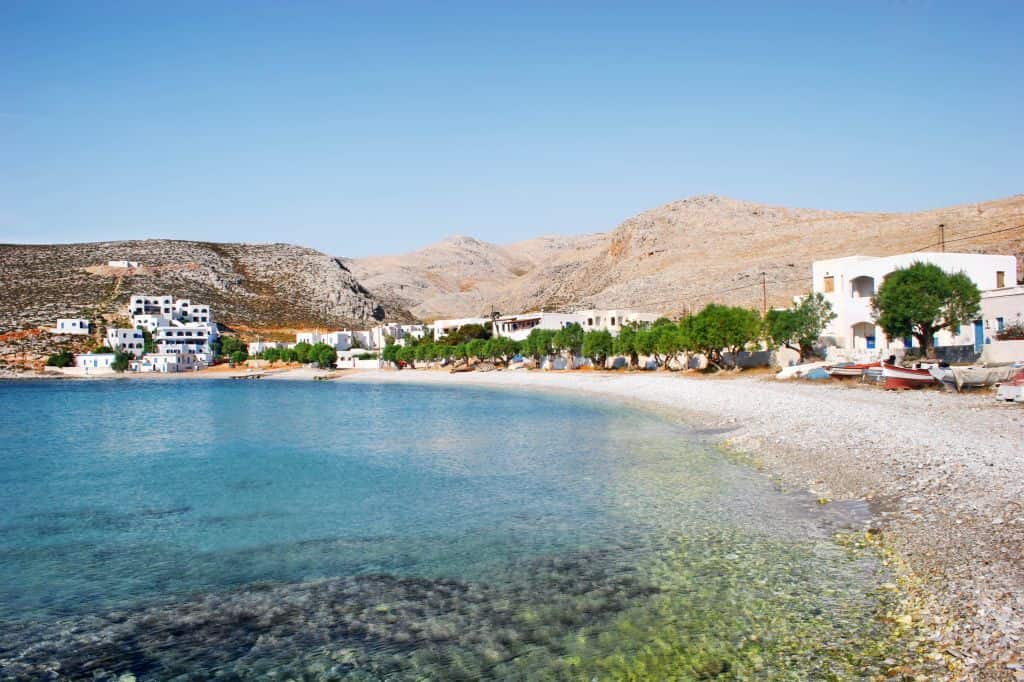
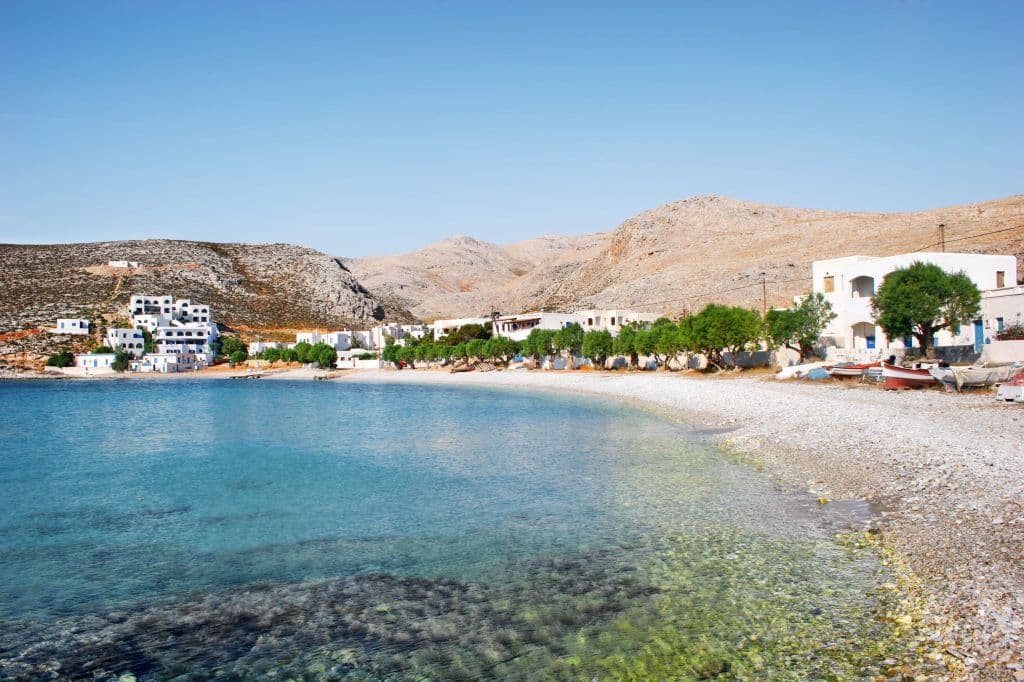
Karavostasi is one quay, a beach, a few tavernas and rooms, and a bus stop. Chora sits 3 km and about 10 minutes above it on a switchback road; you can walk it in 45 minutes, but not with luggage in August.
Buses meet most ferries and run up to Chora, from where the Ano Meria and Agali services continue in summer. They are timed to the boats, but a late-night arrival can still mean a wait in the dark on the quay. Our Karavostasi port guide covers where the bus stops, where to eat while you wait, and where the beach is.
The port itself is worth ten minutes before you leave it. Vardia beach is a 10-minute walk north, Livadi and the campsite are about 1 km south, and two or three tavernas serve the arrivals all summer. What Karavostasi does not have is a bank: the island's two ATMs are up in Chora, and plenty of tavernas take cash only. Draw money before you need it, and keep small notes for the bus.
The alternative is to have your own wheels standing there when the ramp comes down: a scooter or an ATV waiting at the end of the quay. We deliver to the port free of charge, whatever time your ferry docks — first light or close to midnight — with helmets, a free island map and 24/7 roadside assistance. Tell us your boat, not your ETA; we watch the arrivals.
Send us your ferry name and arrival date when you book. If the sailing is delayed or cancelled, we move the delivery with it — no cost, no phone calls from the quay.
Frequently asked questions
Related guides
 Getting there
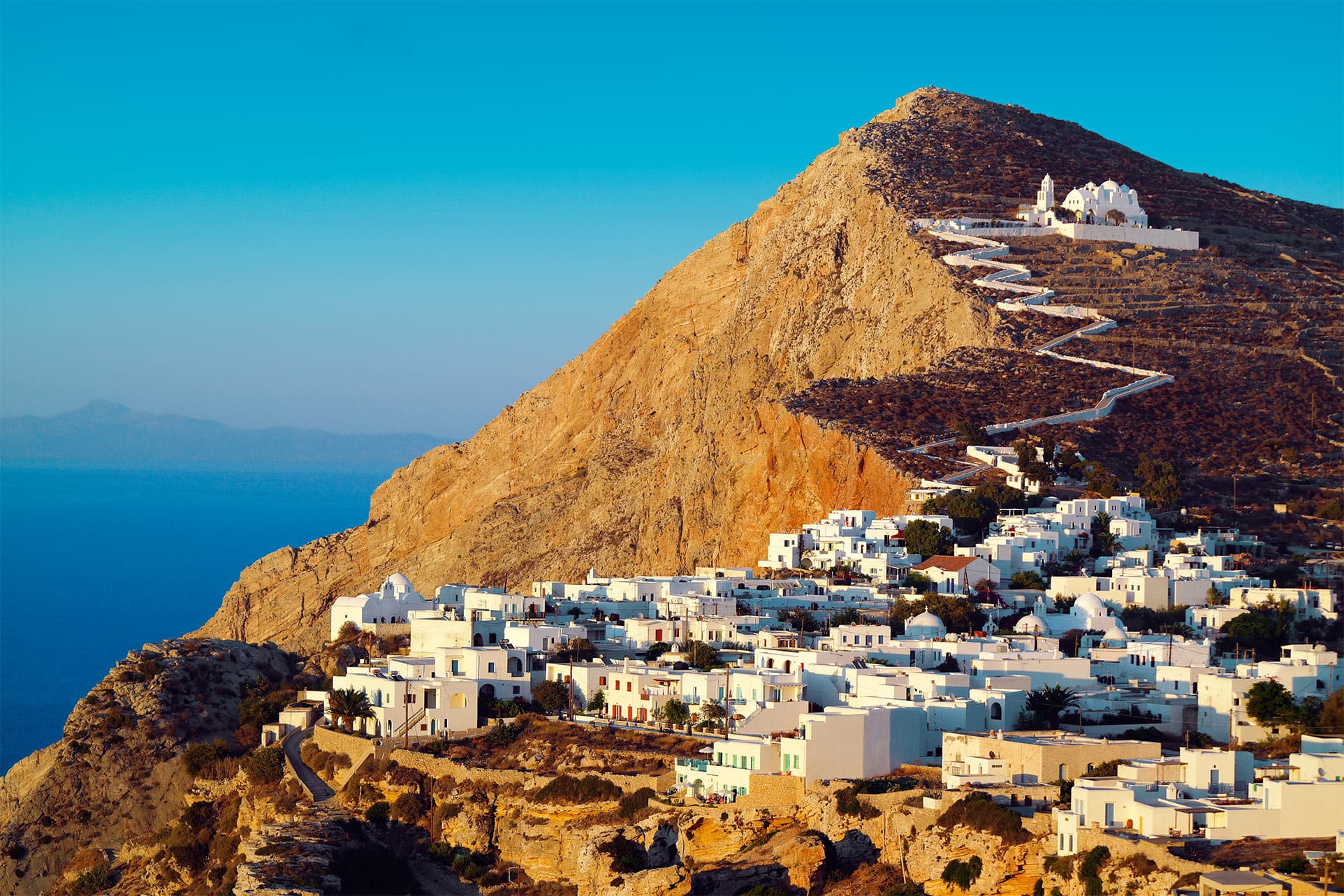
Athens to Folegandros Ferry: Piraeus, Times and Tips
Piraeus to Karavostasi in 4 to 11 hours: high-speed or conventional, how to reach the port and what to do when you land.
 Getting there
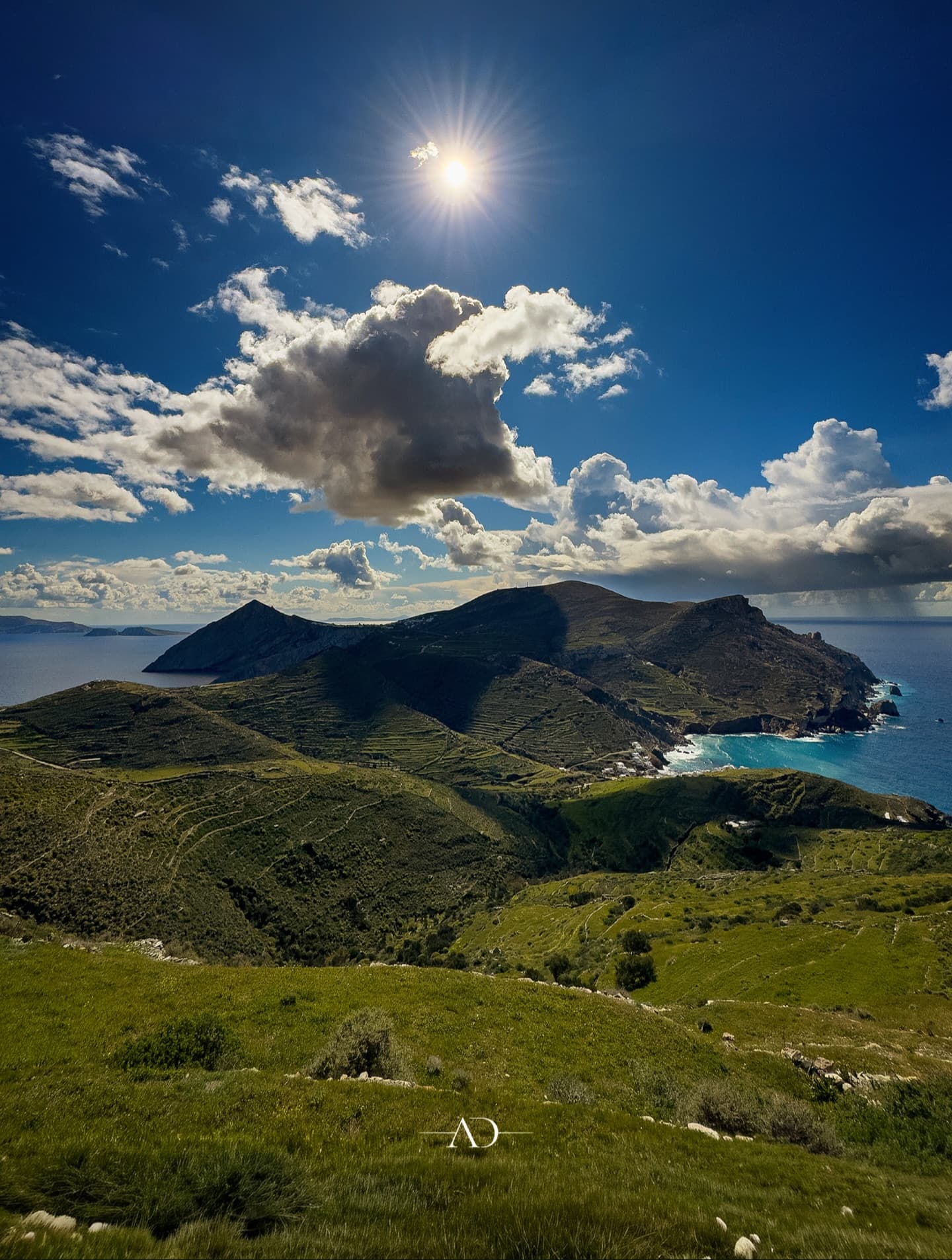
Santorini to Folegandros Ferry: Times, Fares and Tips
Forty-five minutes to three hours from Athinios to Karavostasi: which boat to pick, when it sails and what to do the moment you land.
 Villages & sights
Karavostasi, the Port of Folegandros: Arrival, Beaches, Tavernas and the Way Up to Chora
Every ferry docks here. What you find on the quay, how to get up the 3 km to Chora, the port's three beaches, fish on the seafront, the excursion and diving boats, and why a night at Karavostasi is worth it.
Book a vehicle for your arrival
Book online in a minute or message us on WhatsApp.