
Folegandros Practical Information: ATMs, Pharmacy, Buses, Petrol and Signal
What to know before you land: where the two ATMs and the only petrol station are, how buses and taxis work, pharmacy and doctor, emergency numbers, water, mobile signal, when things open and what to pack.
Getting around: buses, taxis, rentals, petrol
Folegandros has one paved road, from the port to Chora and on to Ano Meria, about 12 km end to end, plus the branch to Agali. Everything else is dirt track and footpath.
- Buses: Chora – Karavostasi, which usually meets the ferries; Chora – Ano Meria, a few departures a day; Chora – Agali in summer. Timetables change every season and are posted at the Chora stop.
- Taxis: one or two on the whole island. Book ahead if you need one for the ferry.
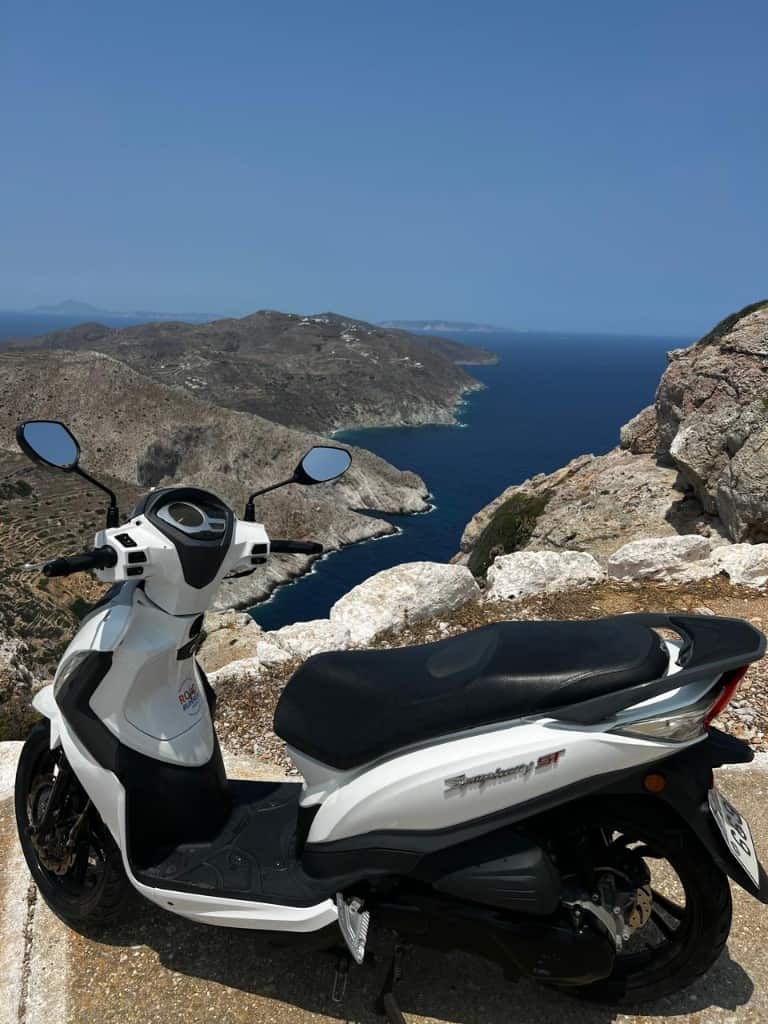
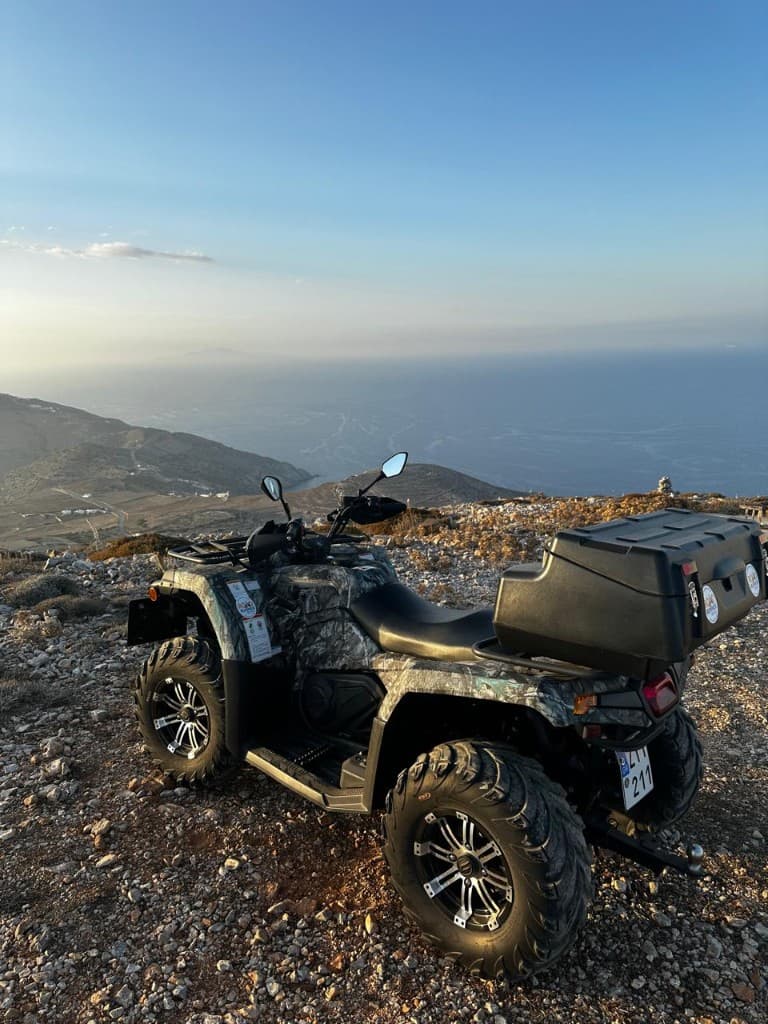
- Rentals: a scooter for the asphalt, an ATV for the dirt tracks of the north. Road Runner delivers free to the port and to hotels, helmets included. See the rental guide and the licence guide.
- Petrol: one station on the whole island, on the Chora – Ano Meria road. Fill up before heading down to beaches.
- Parking: free everywhere; Chora is pedestrian, you park at its entrances.
For the roads in detail, see the driving guide.
Money and shops
The island has two ATMs, both in Chora, and in August they run dry before the weekend. Many tavernas, rooms and the small boats take cash only; the larger restaurants, hotels and rental companies take cards. Come with euros from Piraeus or the airport and do not rely on the ATMs for the basics.
For shopping there are mini-markets in Chora and at the port, a bakery in Chora, a greengrocer and the basics for camping or self-catering. Hours follow the Greek summer: morning, a midday break, open again in the afternoon. The post office is in Chora.
Take cash for the beaches: the boat at Agali, the sunbeds and the small tavernas rarely have a card machine. See the where to eat guide.
Health and emergencies
Chora has a pharmacy and the island's regional medical centre, for everyday needs and first aid; serious cases are transferred to a bigger island or to Athens. Bring enough of your own medication and the European health insurance card if you are from the EU.
| Number | For |
|---|---|
| 112 | European emergency number, all services |
| 166 | ambulance |
| 100 | police |
| 108 | coastguard |
The island's real risks are simple: sun without shade, dehydration on the paths, loose stone on the descents and dirt tracks with the wrong vehicle. A hat, water, closed shoes and an ATV instead of a scooter on the dirt solve most of them.
The meltemi in July and August makes the north coast dangerous for swimming and the lighthouse cape dangerous for walking. On days with a strong north wind stay on the south coast.
Water, mobile signal and Wi-Fi
Tap water is usually brackish and locals drink bottled; a six-pack of large bottles from the mini-market on day one is a good idea, plus a refillable bottle for the beaches.
Mobile signal is good in Chora, the port and Ano Meria and weak or absent in the coves and on the western side, below the cliffs. Tell someone where you are going before you head down to an isolated beach, and download the map offline. EU SIM cards roam at no extra charge; everyone else should look at a Greek prepaid card or an eSIM.
Almost all accommodation and the cafés of Chora have Wi-Fi. Road Runner's shop in Chora is open daily 08:00–22:00 and the assistance line answers around the clock.
Season and opening times
The tourist season runs roughly from May to early October; in April and October the accommodation, tavernas and boats open and close gradually, and in winter only the basics operate for the roughly 800 residents. Easter and the 15 August festival at the Panagia are the island's two big celebrations, with Chora full.
Shops follow Greek hours with a midday break, tavernas serve late into the evening, and the Folklore Museum in Ano Meria changes its hours by season. For when to come, the winds and the sea temperatures, see the best time to visit guide, and for the ferries the guide on how to get to Folegandros.
What to pack
| Item | Why |
|---|---|
| Cash in euros | two ATMs, many tavernas cash only |
| Licence and, for non-EU, the International Driving Permit | for the rental, in your wallet, not in the safe |
| Water shoes | pebbles on most beaches |
| Closed shoes | paths with loose stone |
| Hat, sunscreen, beach umbrella | minimal shade almost everywhere |
| Refillable bottle | brackish tap water, shadeless paths |
| Light jacket or long sleeve | the wind in the evening on the scooter and at the sunset |
| Small torch | paths and roads with no lighting after dark |
| Mask and snorkel | Galifos, Ambeli, Livadaki |
| Medication and European health card | one pharmacy, one medical centre |
Road Runner gives a free island map with every rental and helmets for everyone. See the prices page and the Folegandros travel guide for planning.
Frequently asked questions
Related guides
 Getting there
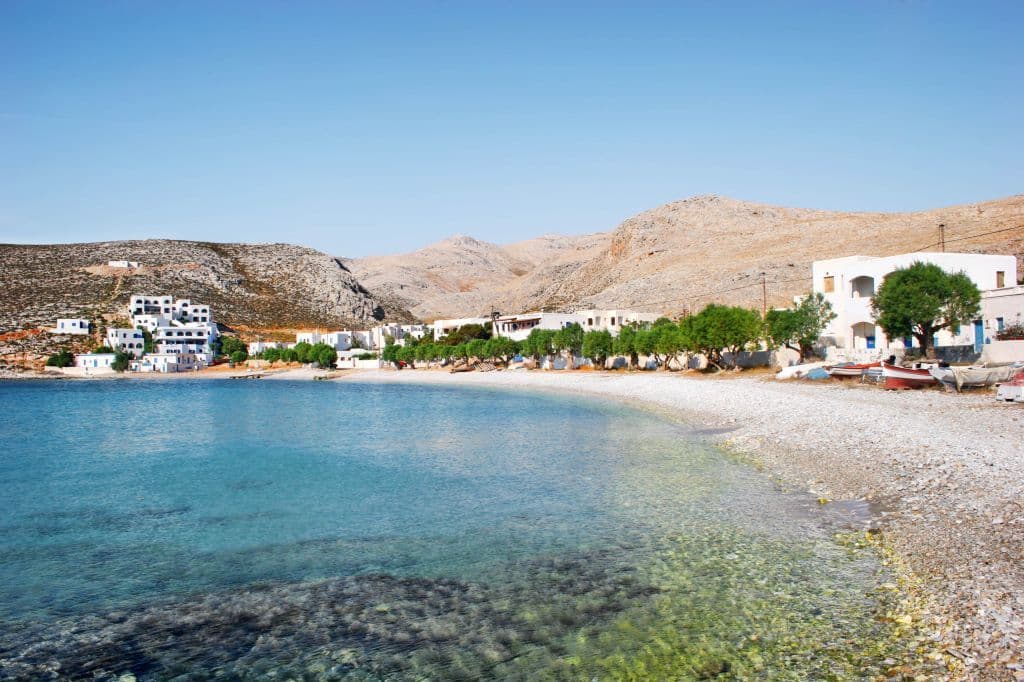
How to Get to Folegandros: Ferries, Ports and Nearest Airports
Folegandros has no airport: every ferry route, how long it takes, what it costs and what to do the moment you step off at Karavostasi.
 Rental & driving
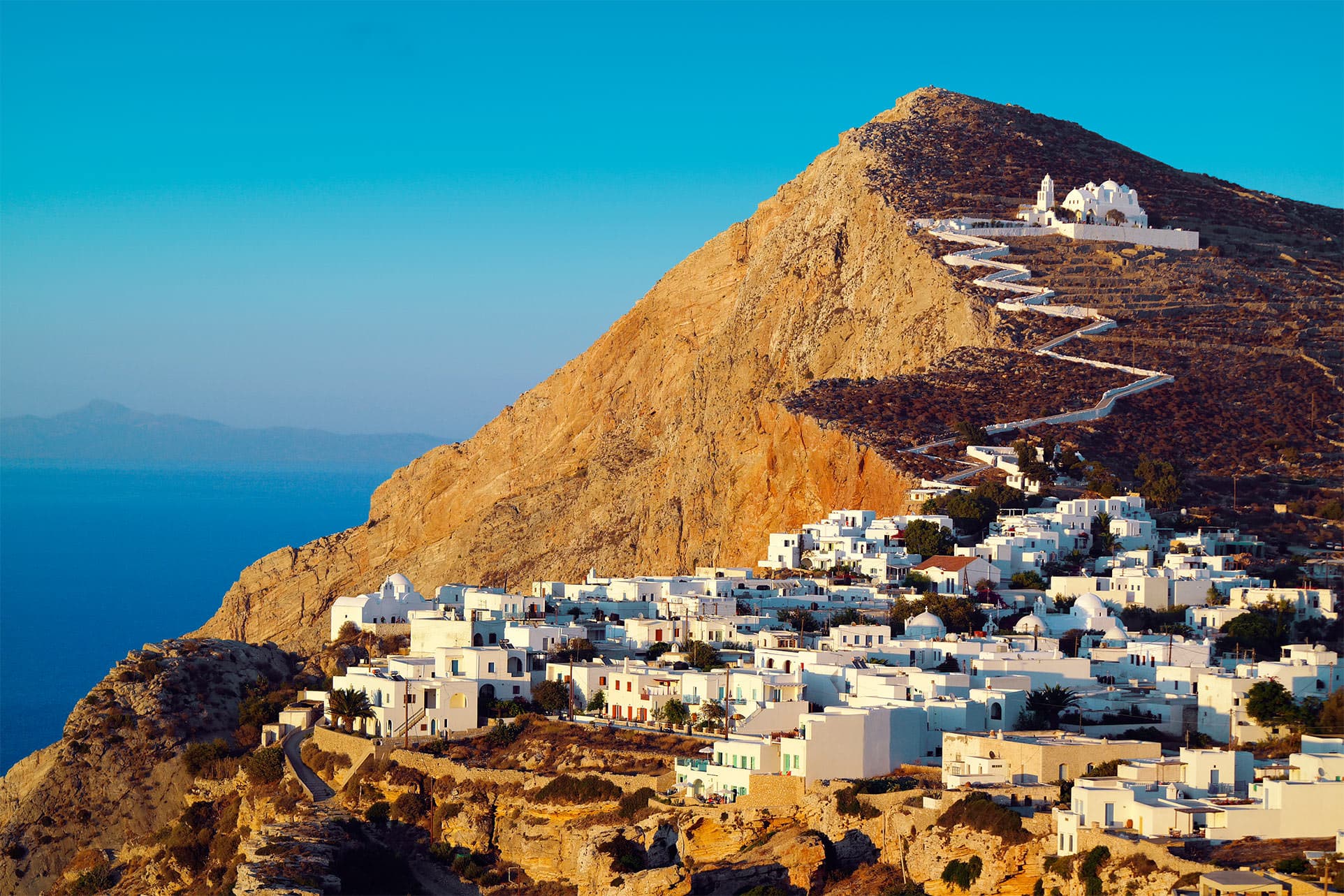
Driving in Folegandros: Roads, Fuel, Parking and Safety
Everything to know before driving on the island: road conditions, dirt tracks, the single petrol station, parking at Chora, and the rules.
Plan your tripBest Time to Visit Folegandros: A Month-by-Month Guide
Weather, sea temperature, meltemi, crowds and ferries month by month, so you can pick the right week for Folegandros.
See the fleet and prices
Book online in a minute or message us on WhatsApp.