

Best Time to Visit Folegandros: A Month-by-Month Guide
Weather, sea temperature, meltemi, crowds and ferries month by month, so you can pick the right week for Folegandros.
The short answer
Late May to June, and September to early October. Those are the two windows when Folegandros is at its best: everything open, ferries frequent, heat without glare, sea warm enough to swim, and a Chora that can breathe.
In June the air sits around 27 °C and the sea around 23 °C, with almost no rain. In September the sea is warmer still, about 25 °C, and the crowds thin out day by day.
July and August are glorious but carry two costs: people and meltemi. April and October are beautiful and cheap, with the risk that some places have not opened yet or have already closed.
If you are combining islands, read our Folegandros travel guide and how to get to Folegandros alongside this page.
The year, month by month
Averages, rounded from Cycladic stations. Treat them as a trend, not a forecast.
| Month | Air °C | Sea °C | Rain days | Meltemi | Crowds | Ferries | Verdict |
|---|---|---|---|---|---|---|---|
| January | 14 / 9 | 16 | 9 | light | off-season | minimal | Solitude only |
| February | 14 / 9 | 15 | 7 | light | off-season | minimal | Cold sea |
| March | 16 / 10 | 16 | 5 | light | off-season | minimal | Green, closed |
| April | 19 / 12 | 17 | 3 | light | quiet | reduced | Hiking, not swimming |
| May | 23 / 16 | 20 | 1 | light | quiet | regular | Excellent |
| June | 27 / 20 | 23 | 0 | light | moderate | full | Ideal |
| July | 29 / 23 | 25 | 0 | strong | busy | full | Hot, windy |
| August | 29 / 23 | 26 | 0 | strong | peak | full | Book early |
| September | 27 / 21 | 25 | 1 | moderate | moderate | full | The sweet spot |
| October | 23 / 17 | 23 | 3 | light | quiet | reduced | Calm, some closures |
| November | 19 / 14 | 20 | 6 | light | off-season | minimal | Season over |
| December | 16 / 11 | 18 | 9 | light | off-season | minimal | Winter |
The sea column explains why September beats June for swimming: the water holds the summer's heat long after the air has cooled.
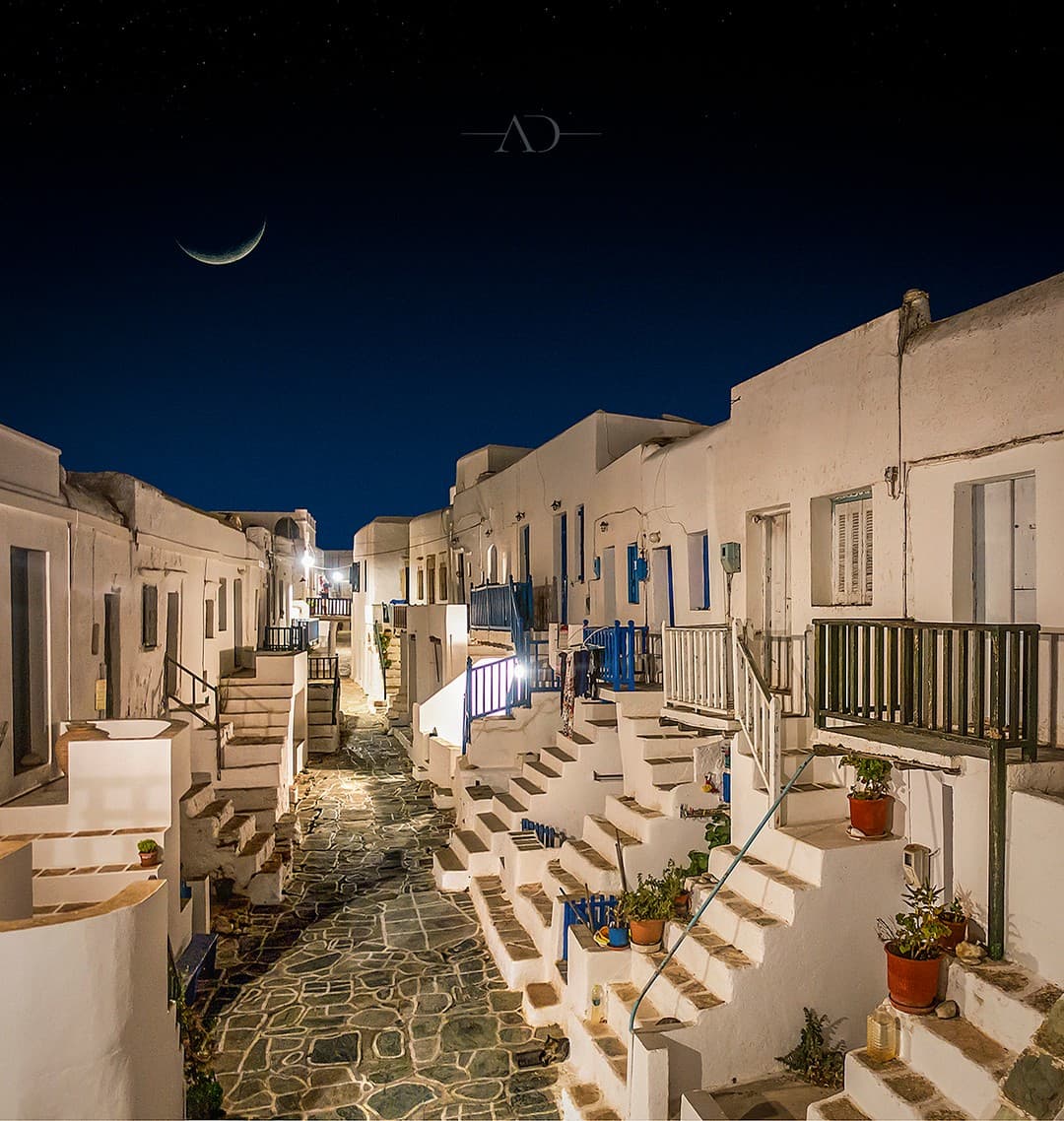
Spring: April and May
April is the island's green secret: terraces full of wildflowers, footpaths at their best, clean light. But the sea sits at 17 °C and plenty of rooms and tavernas open later. At Greek Easter, Chora fills with locals and becomes a different experience altogether.
May is the balance point. The air reaches 23 °C, rain almost disappears, ferries settle into a regular rhythm and the island wakes up gradually. At 20 °C the sea is fresh but perfectly swimmable from mid-month.
It is also the cheapest month to rent and the calmest for riding: no traffic on the road to Ano Meria, easy parking, whole beaches to yourself. For a first day based in Chora, May is hard to beat.
Summer: July and August
This is high season and it shows: full ferries, full rooms, a queue for tables in Chora after nine. The air holds around 29 °C, no rain, 12 to 13 hours of sun a day.
The issue is not the heat, it is the meltemi. The north wind blows hardest in July and August, sometimes three or four days in a row. The north-facing beaches — Ambeli, Ligaria, Agios Georgios — turn choppy and wind-blasted.
In a strong meltemi the small boats may not sail and the north coast becomes uncomfortable. Switch sides: the south coast, from Agali down to Livadaki, stays calm almost every time.
Local habits that work: beach before eleven or after five, shade at midday, water with you, and book everything — room, vehicle, even a table at a well-known taverna. The fortnight around 15 August is the absolute peak.
September and October: our favourite window
September has the warmest sea of the year, around 25 °C, with the air still at 27 °C and the meltemi easing off. Ferries run in full all month, everything is open, and after the first week the crowds thin noticeably.
The light changes too: more golden, lower, perfect for Chora's lanes and for sunsets out towards Ano Meria. It is also the best stretch for combining swimming and hiking, because the paths are no longer scorching at eleven in the morning.
October keeps the sea at 23 °C and the beaches quiet, but it is a transition month: ferry frequencies drop and some rooms, tavernas and shops start to close, usually from mid-month. Confirm whatever you book.
We stay open to the end of October at low-season rates; if you are planning a trip then, message us and we will confirm availability.
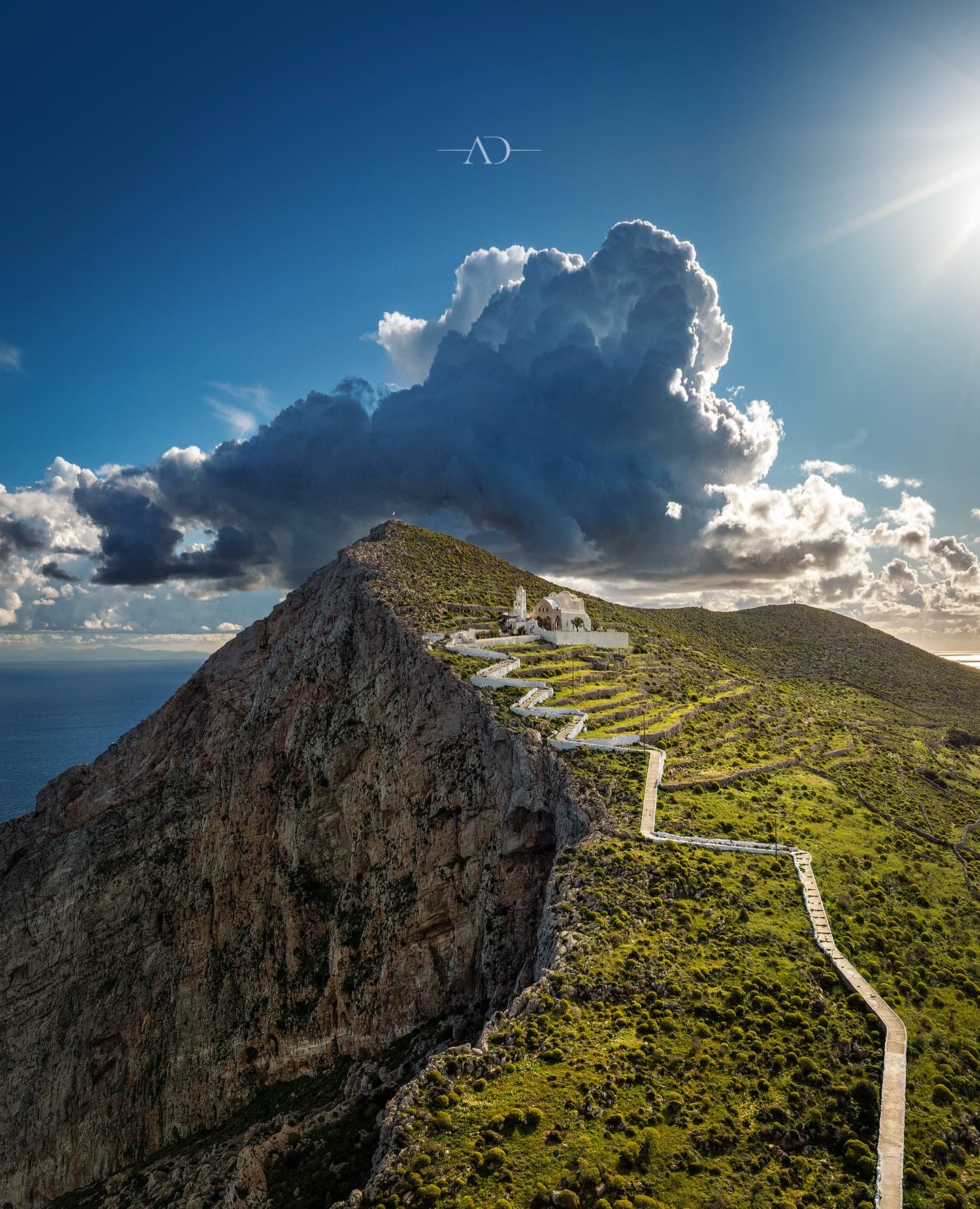
Winter: the honest picture
From November to March, Folegandros goes back to its roughly 800 residents. Most tavernas, hotels and shops are shut, ferries are minimal and vulnerable to weather, and the months count 7 to 9 rain days each.
The air does not get truly cold — 14 to 16 °C by day — but the north wind makes it feel sharper, and a sea of 15 to 16 °C rules out swimming.
Come only if that is exactly what you want: empty lanes, winter light, a kafeneio with locals. Arrange everything in advance and keep a plan B for the ferry.
The weather questions we get asked most
What is the weather like in Folegandros in September?
Warm and steady. Air around 27 °C by day and 21 °C at night, sea at 25 °C, roughly one rain day in the whole month. The meltemi drops back to moderate. Bring a light layer for evenings in Chora, which sits 200 m above the sea and is always cooler.
Is Folegandros worth it in October?
Yes, mainly in the first half. The sea is still 23 °C, the beaches are quiet and prices drop. After mid-month expect fewer ferries and gradual closures; confirm your room and your crossing before you commit.
Is Folegandros windy?
It is, like all the Cyclades. The meltemi blows from the north, mostly in July and August, and can last for days. It does not ruin a holiday: you simply change side of the island. The south coast is sheltered and Agali is the classic refuge. For riding in it, see the advice in our rental guide.
What to pack
- Shoes with grip for the stone paths and the descents to the beaches. Flip-flops are not enough.
- A windproof or light layer in every month: evenings in Chora and riding in the meltemi both feel cool.
- Hat and sunscreen — 12 to 13 hours of sun in July and very little shade on the beaches.
- Water shoes for the pebbles, for example at Fira.
- Cash: there are two ATMs in Chora and plenty of tavernas are cash only.
- Swimsuit and towel always with you — with your own vehicle the next beach is always ten minutes away.
For April and October add a waterproof jacket and a long-sleeve top: three rain days a month is not many, but they arrive with wind.
When to rent your vehicle
Our prices follow the season exactly, with the same months every year:
- Low — May and September–October: scooters from €25/day, ATVs from €65/day.
- Mid — June and July: scooters from €30/day, ATVs from €70/day.
- High — August: scooters from €30/day, ATVs from €80/day.
Availability, not price, is the real constraint in August: the island's fleet is small and the ATVs go first. In May, June and September you can usually find a vehicle with a few days' notice.
September pairs the warmest sea of the year with low-season prices. If your dates are flexible, it is the best value on the calendar.
All the rental prices and the available scooters are online, with free delivery to the port and to your hotel.
Frequently asked questions
Related guides
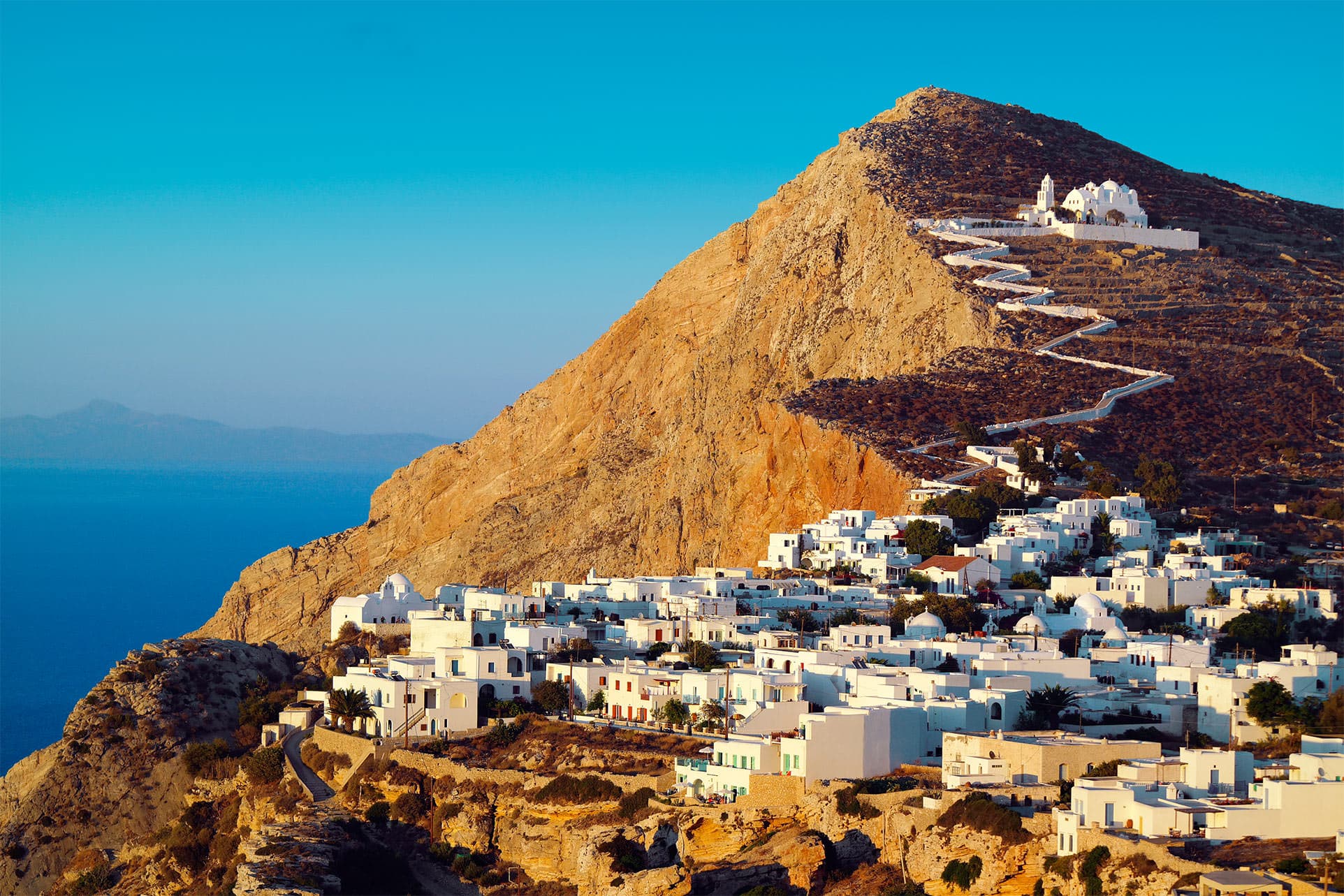 Plan your trip
Folegandros Travel Guide: The Complete Island Guide
Everything you need for Folegandros: ferries, villages, beaches, food, getting around and the best time to come.
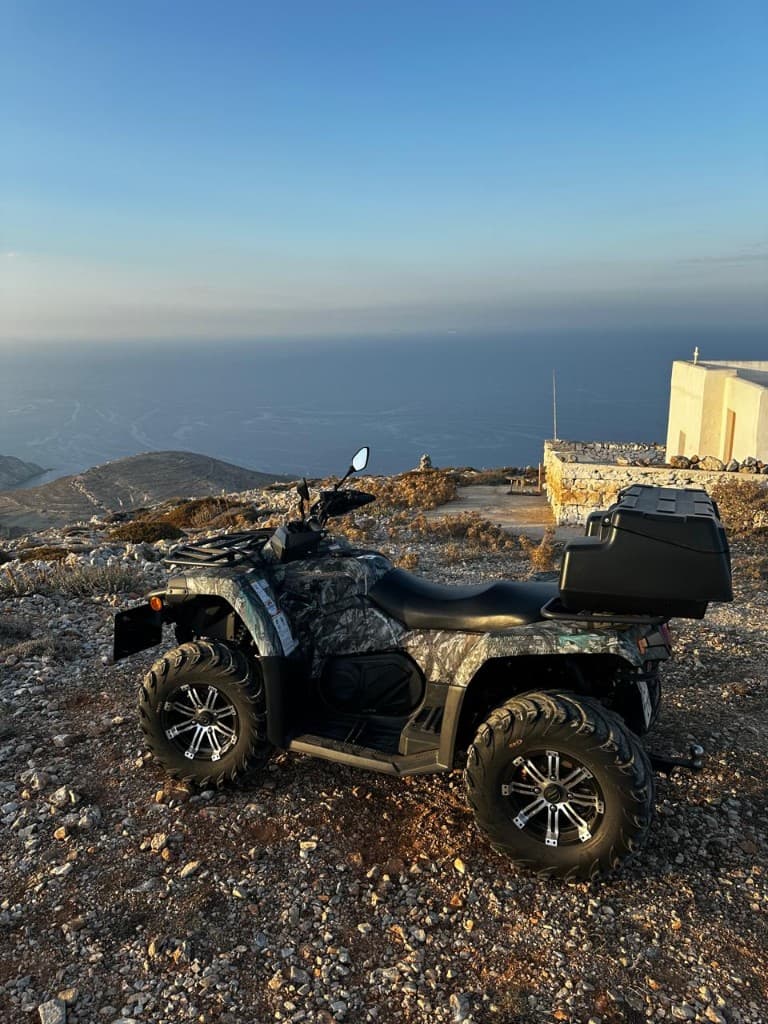 Rental & driving
Scooter & ATV Rental in Folegandros: The Complete Guide
Which vehicle, which licence, what it costs and where it takes you: everything you need before renting a scooter or ATV on Folegandros.
 Getting there
How to Get to Folegandros: Ferries, Ports and Nearest Airports
Folegandros has no airport: every ferry route, how long it takes, what it costs and what to do the moment you step off at Karavostasi.
Book a scooter or ATV
Book online in a minute or message us on WhatsApp.